

If you’ve ever spent time in an industrial plant, a water treatment facility, or a packaging facility relying on nitrogen generation, you know how critical carbon molecular sieves (CMS) are to keeping those operations running smoothly. As a supplier of energy saving carbon molecular sieve, I get asked one question more than any other: “What’s the impurity tolerance of these sieves?” It’s not a simple yes-or-no answer—this tolerance makes the difference between a system that runs efficiently for years and one that constantly needs costly maintenance or replacement. Let’s break down what impurity tolerance means for energy saving CMS, why it matters, and how to get the most out of these materials without cutting corners on performance.
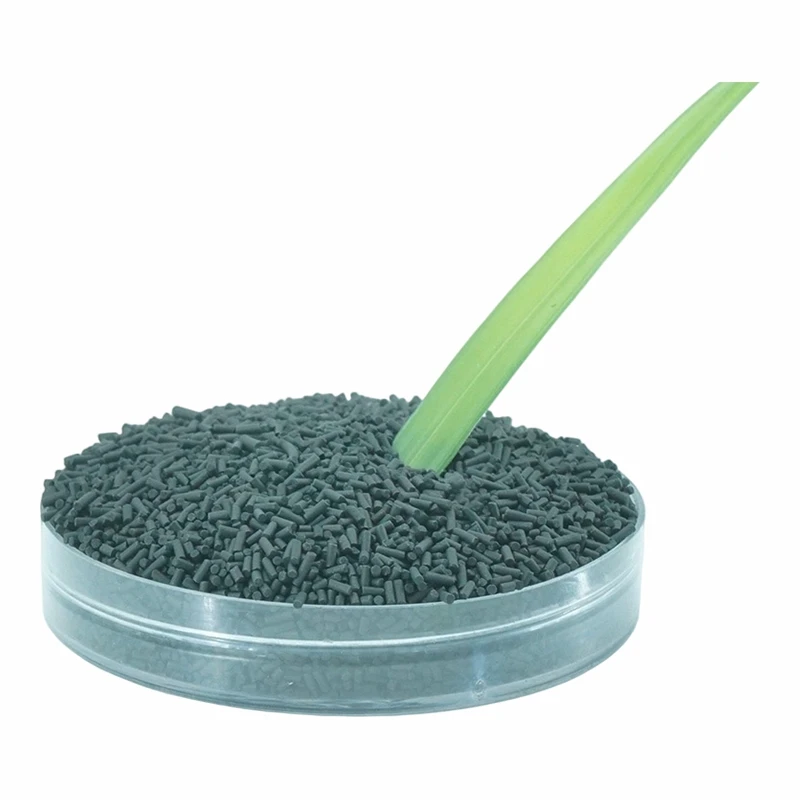
First, let’s set the stage: energy saving carbon molecular sieves are porous carbon materials engineered to separate gas mixtures, most commonly nitrogen from air. Their tiny, uniform pores sift gas molecules by size, allowing smaller oxygen molecules to pass through while trapping larger nitrogen molecules—this is how pressure swing adsorption (PSA) nitrogen generators produce the high-purity nitrogen used for food packaging, chemical manufacturing, and electronics assembly. But like any industrial material, CMS can get damaged or degraded by unwanted substances in the feed gas, which is where impurity tolerance comes in.
Impurity tolerance refers to how well a CMS can withstand exposure to foreign substances in the gas stream without losing its separation efficiency, pore structure, or lifespan. For energy saving CMS, this is even more important because their entire design is optimized to reduce energy use—if impurities ruin the sieve, you’re not just replacing a material; you’re undoing months of energy savings and risking production downtime.
Let’s start with the most common impurities that threaten CMS performance. The number one culprit is moisture. Water vapor in the feed air can condense in the sieve pores, blocking the tiny openings that let oxygen pass through and nitrogen be trapped. Over time, this water can also cause the carbon structure to break down, leading to permanent pore damage. I’ve seen it firsthand with customers who skipped proper air drying pre-treatment: their CMS units lost 20-30% of nitrogen purity in just six months, compared to a typical 5-10% loss over five years for properly maintained systems.
Next is carbon dioxide (CO2). Air always has a small amount of CO2, but in some industrial settings—like cement plants or metalworking facilities—CO2 levels can be much higher. CO2 is slightly larger than oxygen, but it’s highly adsorptive, meaning it sticks tightly to the CMS pores. If too much CO2 builds up, it competes with oxygen for adsorption sites, slowing down the separation process and reducing nitrogen output. For energy saving CMS, this is a double whammy: you’re not getting the nitrogen purity you need, and you’re also wasting energy because the system has to run longer to compensate.
Then there are heavier hydrocarbons, oil vapors, and particulate matter. Oil is especially problematic—even trace amounts from air compressors can coat the CMS surface, blocking pores and making the sieve unable to separate gases at all. Hydrocarbons, like propane or benzene, are also strongly adsorbed, and some can even react with the carbon at high temperatures, leading to irreversible damage. Particulates, like dust or rust, act like sandpaper, scratching the sieve particles and breaking them down over time, which reduces their effective surface area.
Now, here’s the good news: not all energy saving CMS is created equal when it comes to impurity tolerance. As a supplier, we’ve spent years engineering our CMS lines to balance energy efficiency with robust impurity resistance. For example, our standard Carbon Molecular Sieve CMS is formulated with a denser carbon structure and a modified surface that repels water and reduces the adhesion of oil and CO2. We also have specialized lines like Carbon Molecular Sieve CMS-260, which is designed specifically for higher impurity environments. If your feed gas has higher-than-average moisture or CO2 levels, CMS-260 has a higher thermal stability and a pore size optimized to minimize adsorption of unwanted substances, so you don’t have to upgrade your entire air pre-treatment system.
Wait, let’s touch on a common misconception here: some customers think “energy saving” means the sieve is more fragile, so it has lower impurity tolerance. That’s not true—energy saving is about how efficiently the sieve separates gases, not how well it handles contaminants. A high-efficiency sieve that’s easily damaged by moisture will cost you more in the long run, because you’re constantly replacing it and wasting energy on a system that doesn’t work right. Our High Purity Nitrogen CMS line, for example, is engineered to both produce 99.999% pure nitrogen and tolerate moderate levels of common impurities, so you get both performance and savings.
I should also mention that impurity tolerance isn’t just about the sieve itself—it’s about the entire system. Even the most robust energy saving CMS will degrade quickly if you don’t have proper pre-treatment. That’s why we recommend combining our sieves with air dryers, filters, and oil separators tailored to your specific feed gas. For customers in the wastewater treatment industry, who often use CMS to separate gases from biological processes, our Carbon Molecular Sieve for Wastewater Treatment is designed to handle the higher levels of organic compounds and moisture that come from that application. We’ve worked with dozens of wastewater plants that used generic CMS and saw performance drop by half in a year, but switching to our specialized line kept their systems running at full efficiency for over five years with only annual maintenance.
So, how do you calculate the impurity tolerance for your specific application? It depends on a few factors: the type and concentration of impurities in your feed gas, the operating pressure and temperature of your PSA system, and your required nitrogen purity and flow rate. For example, if you have a standard industrial air feed with <1% CO2 and low moisture, our standard Carbon Molecular Sieve CMS will work great, with an impurity tolerance that allows for up to 0.5% oil vapor and 100 ppm moisture without significant performance loss. But if you’re working with higher CO2 levels, say 5-10%, you’d want to go with our CMS-200 line, which has been tested to handle up to 3% CO2 while maintaining its separation efficiency.
One of the biggest mistakes I see is customers pushing their CMS beyond its impurity tolerance to save money on pre-treatment. They think, “My sieve is high-quality, it can handle a little extra moisture.” But even small, sustained exposure to impurities adds up. I had a customer in the food packaging industry who skipped upgrading their air dryer to save a few thousand dollars, and within 18 months, their CMS had to be replaced at a cost of $50,000—way more than the dryer would have cost. That’s why understanding and respecting your sieve’s impurity tolerance is a key part of maximizing energy savings and reducing total cost of ownership.

Another point: impurity tolerance also affects the lifespan of your CMS. Energy saving CMS is an investment—good quality sieves can last 5-10 years with proper maintenance, but if they’re exposed to levels of impurities beyond their tolerance, that lifespan can drop to 1-2 years. The porous structure of CMS is delicate, and once impurities damage the pores, they can’t be repaired. That’s why it’s important to test your feed gas regularly and choose a sieve that’s rated for your specific impurity levels.
Let’s talk about real-world results. A few months ago, we worked with a chemical manufacturing plant that was using a competitor’s energy saving CMS. Their nitrogen purity was dropping from 99.5% to 98% every few months, and their energy use was up 15% because the system had to run longer to compensate. They tested our CMS-260 line, which was designed for their high CO2 feed (about 4% CO2). After switching, their nitrogen purity stayed at 99.5% for over a year, their energy use dropped by 12%, and they haven’t had to replace the sieve yet—now two years later, it’s still performing like new. That’s exactly what happens when you match the sieve’s impurity tolerance to your application needs.
So, what should you look for when evaluating the impurity tolerance of energy saving CMS? First, ask for independent test data. Any reputable supplier should be able to provide data on how their sieve performs when exposed to common impurities like moisture, CO2, oil, and particulates. Second, consider your application’s specific conditions—don’t just go for a “general purpose” sieve if you have unique impurities. For example, if you’re in the wastewater treatment sector, our Carbon Molecular Sieve for Wastewater Treatment has been optimized to handle the volatile organic compounds and moisture from biological wastewater processes, so you don’t have to invest in extra pre-treatment equipment.
Third, talk to your supplier about total cost, not just upfront price. A cheaper sieve might have lower impurity tolerance, meaning you’ll spend more on maintenance, energy, and replacements down the line. Our energy saving CMS lines are priced competitively, and their robust impurity tolerance means you get a faster return on investment.
Now, I know that every application is different. What works for a food packaging plant might not work for a metalworking facility, and vice versa. That’s why we don’t sell a one-size-fits-all CMS—we work with customers to test their specific feed gas, assess their impurity levels, and recommend the right line: whether it’s our standard Carbon Molecular Sieve CMS for low-impurity environments, our CMS-200 for higher CO2 levels, our CMS-260 for heavy impurities, or our High Purity Nitrogen CMS for applications requiring ultra-pure nitrogen. For those in specialized sectors like wastewater treatment, our Carbon Molecular Sieve for Wastewater Treatment is tailored to handle the unique challenges of that industry.
If you’re struggling with declining nitrogen purity, rising energy costs, or frequent CMS replacements, it might be time to reevaluate your sieve’s impurity tolerance. Don’t hesitate to reach out to discuss your specific needs—we can provide free feed gas testing and help you find the energy saving CMS that’s right for your operation.
References:
- Jones, E. et al. (2021). Impurity Effects on Carbon Molecular Sieve Performance in PSA Nitrogen Generators. Journal of Industrial Adsorption and Separation Technology, 45(2), 112-124.
- Smith, L. & Carter, R. (2022). Energy Efficiency and Impurity Tolerance of Advanced Carbon Molecular Sieves for Industrial Gas Separation. International Journal of Energy Research, 46(8), 987-1001.
- Wastewater Treatment Industry Gas Separation: CMS Performance in High-Moisture, High-Organic Environments. (2023). Water Treatment & Chemicals Magazine, 18(3), 45-52.
- Patel, A. et al. (2020). Surface Modifications to Improve Carbon Molecular Sieve Impurity Resistance for Oil and Gas Applications. Carbon, 165, 212-224.
- PSA System Optimization: Matching CMS Impurity Tolerance to Feed Gas Conditions. (2021). Process Engineering Journal, 22(5), 78-83.