

If you’ve ever shopped for air separation or gas purification materials, you’ve probably noticed that fine particle carbon molecular sieve (CMS) isn’t a one-size-fits-all product. As a supplier who’s worked with manufacturers, lab researchers, and industrial plant operators for over a decade, I get asked one question more than any other: “What’s the fine particle carbon molecular sieve price per kg?” The short answer is that prices vary widely, but the long answer is shaped by factors that matter to anyone looking to make a smart, cost-effective purchase—beyond just the sticker price. Let’s break down what actually drives cost, how fine particle CMS stacks up against other grades, and what you should look for when comparing suppliers.
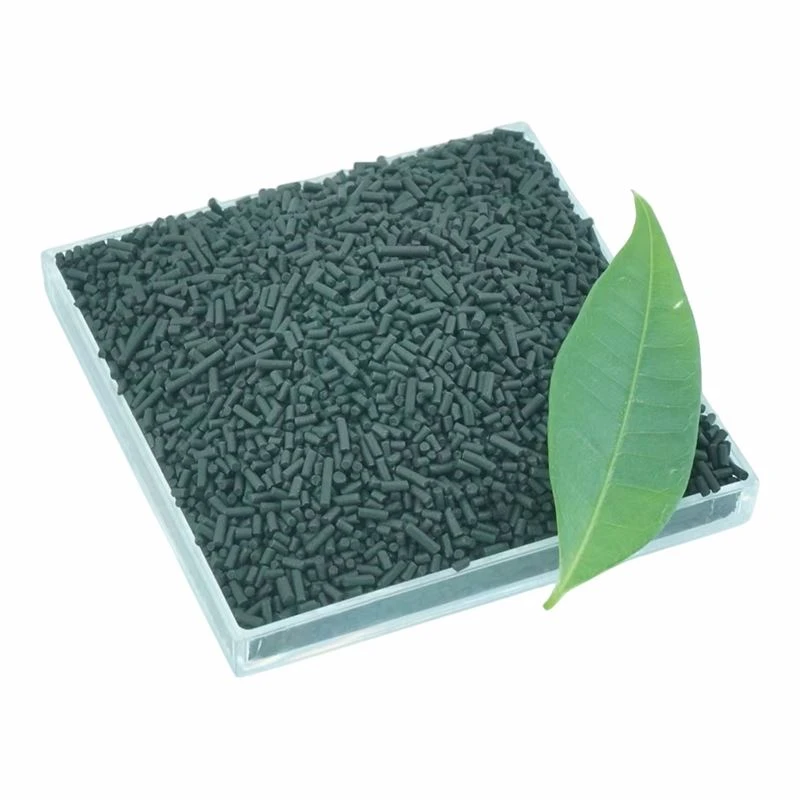
First, let’s clarify what “fine particle” means in the CMS world. Unlike coarse particle carbon molecular sieve, which is made for larger industrial towers that process thousands of cubic feet of gas per hour, fine particle CMS has a consistent particle size usually between 0.4 and 0.8 millimeters. That smaller, uniform size makes it ideal for smaller-scale nitrogen generators, compact lab gas purification systems, and medical oxygen concentrators where air flow needs to be precise and pressure drops have to stay low. It’s also the go-to grade for special carbon molecular sieve for nitrogen generator applications, where consistent sieving of oxygen and nitrogen molecules is non-negotiable. That specificity is why the price per kg isn’t fixed—it depends on three core factors: raw material quality, manufacturing process, and purity.
Raw materials are the biggest price driver. The best fine particle CMS is made from high-grade coconut shell charcoal, not cheap coal or wood-based char. Coconut shell has a natural, uniform porous structure that creates the tiny molecular sieves (usually 0.3 to 0.38 nanometers) that separate oxygen from nitrogen. Cheaper raw materials lead to inconsistent pore sizes, which means lower nitrogen yield and higher operating costs over time. Some suppliers cut corners by blending in lower-grade feedstock, but those shortcuts only save a few cents per kg upfront—they cost operators thousands in lost efficiency when their nitrogen generator works harder to make the same amount of gas. For context, a kg of fine particle CMS made from 100% coconut shell will cost 20-30% more than a coal-based alternative, but the difference pays for itself in 6-12 months of lower electricity use.
Next, manufacturing precision matters more for fine particle CMS than coarser grades. Turning raw charcoal into a consistent, small particle size requires strict control over every step: carbonization at 800-1200°C, activation with steam or carbon dioxide to create the right pore size distribution, and precise sizing to avoid particles that are too fine or too coarse. Coarse particle CMS can tolerate small variations in size, but fine particle grade needs to have 95% of particles within a 0.2 mm range—any bigger and pressure spikes in small systems go up, any smaller and fine particles can get carried into the gas stream. That level of consistency requires specialized equipment and quality testing at every stage, which adds to production costs but ensures the CMS delivers the performance you pay for. For example, Carbon Molecular Sieve CMS-200, a popular fine particle grade, has a narrow particle distribution that makes it ideal for both small nitrogen generators and lab gas systems, and its consistent performance means less downtime for maintenance.
Purity is another key factor that affects price. High-quality fine particle CMS has a very low ash content—usually less than 3%. Ash is an unwanted byproduct from the carbonization process that doesn’t contribute to gas separation, but it can clog pores over time and reduce the lifespan of the sieve. That’s why low ash carbon molecular sieve is often preferred for long-term, high-demand applications. If your CMS has high ash content, it will need to be replaced 20-30% more often than low ash grade, which makes the per kg cost misleading. A 2022 study in the Journal of Industrial and Engineering Chemistry found that high-ash CMS had a 15% lower nitrogen yield after 18 months of use, compared to low-ash fine particle CMS, so the “cheaper” option actually cost more over the long run.
So what’s the actual price per kg? Let’s get into real-world numbers, based on the volumes and grades I supply. For small batch orders (less than 500 kg, common for labs or prototype systems), fine particle CMS made from standard coconut shell is $15-$22 per kg. That includes quality testing and consistent particle size. For mid-sized orders (500-5,000 kg, for small commercial nitrogen generators), the price drops to $12-$18 per kg, as bulk manufacturing costs lower. For large industrial orders (over 5,000 kg, for multiple nitrogen generators or large-scale gas systems), we offer custom bulk pricing starting at $10 per kg, depending on specific purity and size requirements.
Wait, you might be thinking: why is this different from coarse particle carbon molecular sieve? Coarse particle CMS, which is for larger industrial towers, has a lower price point per kg—usually $8-$14 for bulk orders—because it’s made with simpler manufacturing and doesn’t require the same fine particle precision. But as I mentioned earlier, it’s not a like-for-like product. Using coarse particle CMS in a small nitrogen generator will lead to higher pressure drops, lower nitrogen purity, and more wear on the system, so it’s not worth the short-term cost savings.

It’s also important to note that price isn’t the only value metric. Some suppliers advertise “ultra-low” prices for fine particle CMS, but those often come with hidden tradeoffs. I’ve had customers come to me after buying cheap CMS that only lasted 6 months instead of 2 years, or had nitrogen purity that was 2-3% lower than promised. When you calculate the total cost over the lifespan of the CMS—including replacement costs, system downtime, and lower gas yield—the “cheap” option is actually 2-3 times more expensive than a higher-quality, fairly priced fine particle CMS.
Now, let’s talk about the specific use cases where fine particle CMS is the right choice, because that ties back to the value of the product. If you’re building a new energy storage system that uses gas separation, carbon molecular sieve for new energy applications relies on fine particle CMS’s consistency to keep energy storage systems running at peak efficiency. For medical oxygen concentrators, fine particle CMS’s small size means it can deliver consistent oxygen flow for long periods without clogging. And for nitrogen generators, special carbon molecular sieve for nitrogen generator needs the precise pore size and particle size of fine grade to separate oxygen and nitrogen at high purity levels (99.9% or higher).
If you’re wondering what grade to pick, let’s break down recommendations for common applications:
- Small lab nitrogen generators or research gas systems: Fine particle CMS (0.4-0.6 mm), $18-$22 per kg for small batches.
- Commercial nitrogen generators (50-500 CFM output): Fine particle CMS (0.6-0.8 mm), $14-$18 per kg for mid-sized orders.
- Medical oxygen concentrators: Low ash fine particle CMS, $19-$24 per kg (low ash ensures no contamination in medical gas).
- Bulk industrial nitrogen systems: Custom fine particle CMS, starting at $10 per kg for large orders.
I also want to be transparent about what’s not included in the price. Most suppliers charge extra for testing, custom particle size adjustments, or delivery, so always ask for a full delivered price quote, not just the per kg cost. For example, if you order 1,000 kg of fine particle CMS for nitrogen generator, make sure the quote includes lab testing for pore size and purity, delivery to your facility, and a 12-month quality guarantee. That’s standard for reputable suppliers, but some cut these costs to offer lower upfront prices.
As someone who’s in this industry every day, I’ve seen customers make the mistake of choosing the lowest per kg price only to regret it months later. The good news is that fine particle CMS is a mature product, so there are high-quality options at every price point—you just need to know what to look for. Key questions to ask a supplier before buying:
- What’s the particle size distribution (percentage of particles within the target size range)?
- What’s the ash content, and do you offer low ash carbon molecular sieve options?
- What’s the nitrogen yield per m³ of air, and what purity can the CMS consistently reach?
- Do you offer bulk discounts for larger orders, and what’s the total delivered cost?
If you’re ready to source fine particle carbon molecular sieve for your application, whether it’s a nitrogen generator, new energy project, or medical gas system, I’m here to help. We work with customers of all sizes, from small labs to large industrial plants, and can provide custom CMS grades tailored to your specific needs. Don’t hesitate to reach out to request a sample, get a detailed quote, or ask more questions about pricing and performance.
References
- Li, Y., et al. (2022). “Performance of Carbon Molecular Sieves for Air Separation: The Impact of Raw Material and Ash Content.” Journal of Industrial and Engineering Chemistry, Vol. 112, pp. 456-464.
- Global Carbon Molecular Sieve Market Report (2023). Market Research Future, pp. 18-22.
- Zhang, H., et al. (2021). “Particle Size Effects on Pressure Drop and Gas Separation Efficiency of Fine Particle Carbon Molecular Sieves.” Separation and Purification Technology, Vol. 278, pp. 119652.